How to Choose the Right Height for Your Ballet Barre
Selecting the correct height for your ballet barre is essential for safe, effective practice. The right height ensures proper alignment, prevents strain, and allows you to perform exercises correctly. Whether you're setting up a barre for yourself or for a young dancer, understanding how to measure and choose the appropriate height is crucial.
This guide provides professional guidance on determining the correct barre height based on your height, age, and practice needs. At PrimaBarre, we offer both fixed-height barres and adjustable height barres to accommodate dancers of all ages and skill levels.
Standard Barre Height Guidelines
The standard height for a ballet barre is typically measured from the floor to the top of the barre. Most professional studios use barres set at approximately hip height, which allows dancers to rest their hands comfortably while maintaining proper posture.
General guidelines:
- For adults: The barre should be approximately at hip bone level
- For children: The barre should be at the child's hip level when standing naturally
- Standard adult height: Typically between 38-42 inches from the floor
- Standard child height: Varies based on age and height, typically 28-36 inches
How to Measure for the Correct Height
The most accurate way to determine the right barre height is to measure from your body. Here's how to do it properly:
For Adults
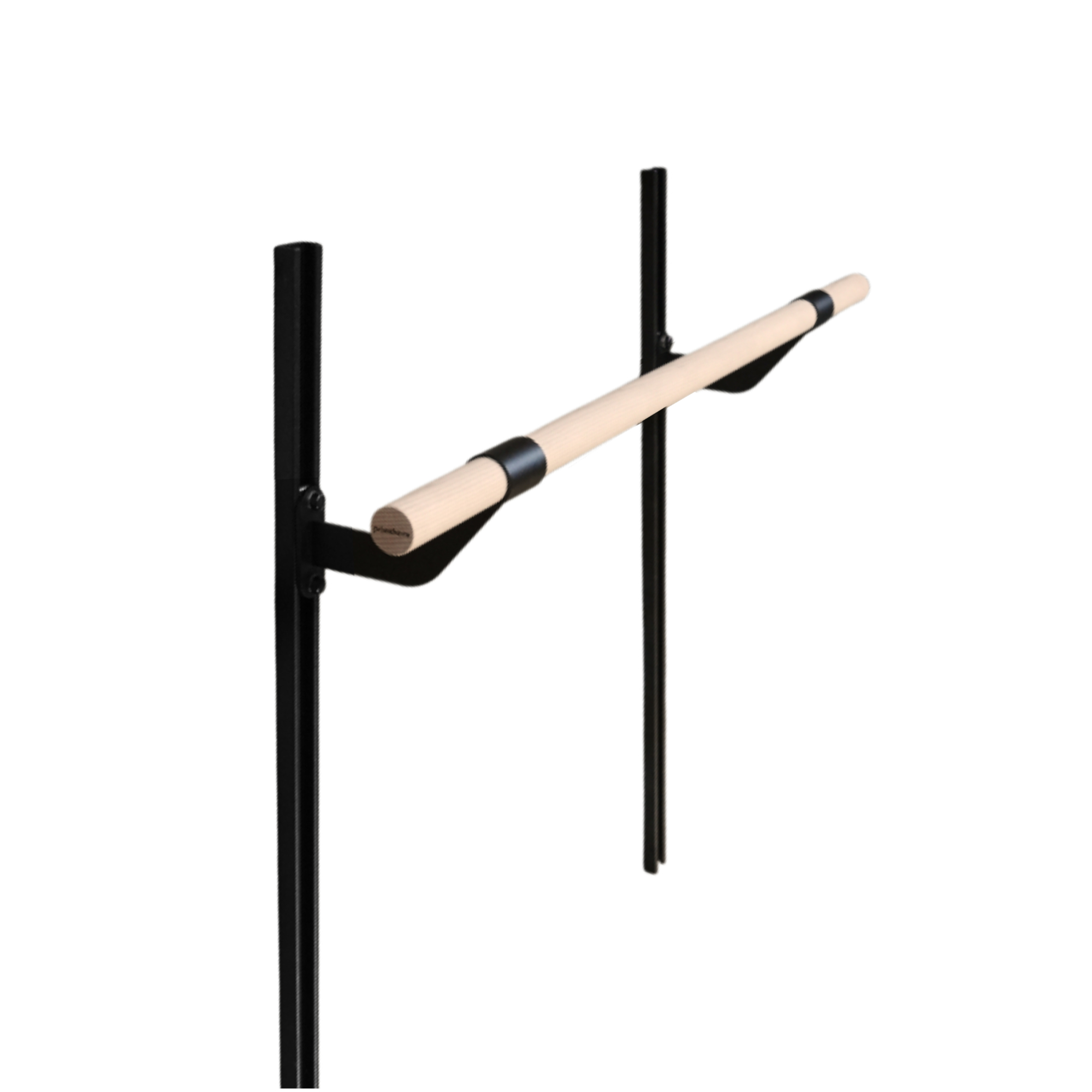
Stand naturally with your feet flat on the floor and your arms relaxed at your sides. Measure from the floor to the top of your hip bone (iliac crest). This measurement gives you the ideal barre height for your body.
- Stand straight with normal posture
- Place your hand on your hip bone
- Measure from the floor to where your hand naturally rests
- This is your ideal barre height
For Children
For young dancers, the barre height should be measured the same way—from the floor to the child's hip bone. However, since children grow quickly, consider an adjustable height barre that can grow with them.
Age-based guidelines for children:
- Ages 3-5: Typically 28-30 inches
- Ages 6-8: Typically 30-32 inches
- Ages 9-11: Typically 32-34 inches
- Ages 12-14: Typically 34-36 inches
- Teenagers: Measure individually, typically 36-40 inches
Why Correct Height Matters
Using a barre at the correct height is important for several reasons:
Proper alignment: A barre at the right height allows you to maintain correct posture and alignment during exercises. When the barre is too high or too low, you may compensate by adjusting your body position, which can lead to poor technique and potential strain.
Comfort and safety: The correct height ensures you can comfortably rest your hand on the barre without reaching up or bending down. This reduces the risk of strain and allows you to focus on your technique rather than maintaining an awkward position.
Effective practice: Proper barre height enables you to perform exercises correctly, supporting proper muscle engagement and development. This is especially important for developing dancers who are learning correct technique.
Fixed Height vs Adjustable Height Barres
When choosing a barre, you'll need to decide between a fixed-height barre and an adjustable-height option.
Fixed-height barres are set at a specific height and cannot be adjusted. These are ideal when:
- The barre will be used by dancers of similar height
- You want a permanent installation at a specific height
- You're setting up a dedicated space for one or two users
Adjustable-height barres can be moved up and down along wall-mounted tracks. These are ideal when:
- Multiple dancers of different heights will use the barre
- You have a young dancer who is still growing
- You want flexibility to accommodate different users
- You're setting up a shared practice space
Special Considerations
Multiple users: If your barre will be used by dancers of different heights, an adjustable-height barre is the best solution. This allows each dancer to set the barre to their ideal height for practice.
Growing children: For young dancers, an adjustable-height barre can "grow" with them, maintaining the correct height as they develop. This eliminates the need to replace the barre as the child grows and ensures they always have proper support for their practice.
Different exercise types: Some dancers prefer slightly different heights for different types of exercises. An adjustable barre allows you to fine-tune the height based on your specific practice needs.
Installation Tips
When installing your barre, keep these tips in mind:
- Measure carefully before installation to ensure the correct height
- Consider the primary user's height when choosing a fixed-height barre
- For adjustable barres, install the tracks to accommodate the full range of heights needed
- Ensure the barre is level and securely mounted
- Test the height by standing naturally and placing your hand on the barre
Final Thoughts
Choosing the correct height for your ballet barre is essential for safe, effective practice. Take the time to measure properly and consider whether a fixed-height or adjustable-height barre best meets your needs.
If you're setting up a barre for a single user or users of similar height, a fixed-height barre at the measured height will work well. If you need flexibility for multiple users or a growing child, an adjustable-height barre provides the versatility you need.
At PrimaBarre, we're here to help you choose the right barre for your needs. All our products are made in the USA with professional-grade quality, ensuring that your barre provides proper support for years of practice.
Why Choose PrimaBarre?
PrimaBarre is committed to creating the world's best barres for dance and fitness. Our products are:
- Made in the USA with premium materials
- Designed with feedback from professional dancers and instructors
- Built to last with a 10-year warranty
- Available in multiple sizes and configurations
- Backed by dedicated customer support
Ready to Choose Your Barre?
Explore our full selection of professional-grade ballet barres, all made in the USA with free shipping.